FREE SHIPPING starting at $150 (Southern CA)


There is a difference between preparing an impressive ingredient and building a memorable meal around it.
The first is largely about technique. The second asks a more interesting question: how should everything on the table work together?
Iberico pork secreto is particularly well suited to that kind of thinking. Rich, deeply flavorful, and designed to be enjoyed in smaller portions, secreto doesn't need to occupy an enormous plate to make an impression. In fact, it becomes more interesting when treated as one part of a larger shared meal.
A Spanish-inspired table provides the perfect framework. Instead of assigning every guest an individual protein, starch, and vegetable, food arrives in dishes meant to be passed. Richness is balanced by acidity. Tender meat sits beside crisp vegetables, briny accents, good bread, and uncomplicated sides. Guests take a little of this, return for more of that, and build their own experience as the meal unfolds.
For home cooks, this approach also removes much of the pressure associated with preparing a premium ingredient. You don't need an elaborate tasting menu or restaurant-level plating. You need one exceptional centerpiece and a table designed to support it.
Why Iberico Pork Secreto Belongs at the Center of a Shared Table
Iberico pork secreto comes from an area around the shoulder of the pig, and its name—secreto, or "secret"—reflects the fact that the thin cut is tucked between other muscles and can be easy to overlook during butchery.
What makes it memorable is its fat.
Iberico pork is known for generous intramuscular fat, and secreto displays that characteristic particularly well. As it cooks, that fat renders through the meat, contributing richness, moisture, and a distinctive texture.
That richness also changes how secreto should be served.
A large portion can overwhelm the palate, particularly when paired with equally rich sides. Slicing the pork and placing it at the center of a shared table creates an entirely different experience. Guests can take smaller amounts and alternate bites of pork with brighter, fresher accompaniments.
This is an important distinction when cooking premium proteins. A centerpiece doesn't necessarily need to be the largest item on the table.
Sometimes it simply needs to be the ingredient everything else responds to.
How Iberico Pork Shapes a Spanish-Inspired Shared Table
A successful shared table is built around contrast.
If the Iberico pork secreto provides richness, the surrounding dishes don't need to compete by becoming equally rich. They should do the opposite.
Think about what happens between bites. Something acidic refreshes the palate. A crisp vegetable creates textural contrast. A briny ingredient adds sharpness. Fresh herbs introduce aroma. Bread or potatoes provide something neutral enough to bring everything back together.
This approach produces a meal that feels abundant without becoming exhausting.
It also makes menu planning easier. Instead of searching for five impressive dishes, start with the strongest ingredient and ask what the table still needs.
If you have richness, add brightness.
If you have tenderness, add crunch.
If you have something deeply savory, introduce freshness.
That is a far more useful way to build a meal than trying to make every component independently impressive.
What to Serve With Iberico Pork Secreto for Flavor Balance
Because Iberico pork secreto has such pronounced richness, acidity is one of its most valuable partners.
That acidity might come from citrus, vinegar, tomatoes, pickled vegetables, or a sharply dressed salad. The purpose isn't to make the pork taste acidic. It is to reset the palate so each bite of secreto feels as satisfying as the first.
Fresh vegetables can serve a similar purpose. Tomatoes at the end of summer, peppers, greens, herbs, and simply prepared seasonal vegetables bring brightness to the table without demanding much attention.
Texture matters too.
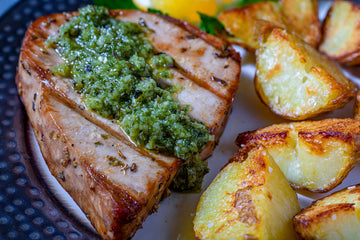
Secreto is tender and succulent, so crisp potatoes, grilled bread, charred vegetables, or crunchy greens provide useful contrast. A meal becomes more engaging when every bite doesn't have the same texture.
Briny ingredients can also work beautifully with Iberico pork. Olives, peppers, and other salty accents provide intensity in small amounts. The key is restraint. These ingredients should sharpen the meal rather than compete with the pork.
The same principle applies to starches. They don't need elaborate sauces or excessive richness. Good bread or simply prepared potatoes can provide exactly the grounding the table needs.
The goal isn't to find the one "correct" pairing for Iberico pork secreto. It is to understand what each accompaniment contributes.
Once you understand that, building the rest of the table becomes intuitive.
How to Cook Iberico Pork Secreto for Slicing and Sharing
The characteristics that make Iberico pork secreto distinctive also influence how it should be cooked.
Because the cut contains significant intramuscular fat, it responds well to assertive heat that encourages browning while allowing some of that fat to render. A hot grill or heavy pan can create a deeply browned exterior while preserving the tenderness within.
Surface moisture works against browning, so patting the meat dry before cooking is useful. Heavy marinades are generally unnecessary and can interfere with the direct contact needed to develop a good exterior.
Secreto already brings substantial flavor to the pan. Seasoning should support that character rather than bury it.
Cooking time varies with the thickness of the specific piece, making temperature a more reliable guide than a rigid number of minutes. Whole-muscle pork should be cooked to a safe internal temperature appropriate for the product and current food-safety guidance rather than judged solely by color.
After cooking, give the pork a brief rest before slicing. This also gives you time to bring the remaining dishes to the table.
When ready to serve, identify the direction of the muscle fibers and slice across the grain. This shortens those fibers and produces a more tender bite.
Arrange the sliced secreto on a platter rather than portioning it onto individual plates. That small presentation decision immediately changes the tone of the meal.
It becomes something to share.
How Much Iberico Pork Secreto Do You Need for a Shared Meal?
Portioning a shared meal requires a different mindset from serving individual steaks.
If several substantial dishes accompany the pork, not every guest needs a restaurant-sized portion of secreto. The protein is part of the experience, not the entire experience.
The appropriate amount depends on what else is being served, how many courses or shared dishes are planned, and whether the meal includes other proteins. A table with bread, potatoes, vegetables, salads, and several smaller dishes will naturally require less pork per person than a dinner where secreto is paired with only one side.
This is another advantage of the shared-table format: it allows a premium ingredient to be appreciated for its quality rather than its quantity.
Guests can begin with several slices and return for more if they wish. Meanwhile, the surrounding dishes keep the meal varied.
Instead of asking, "How large should everyone's steak be?" ask, "How does the entire table add up to a satisfying meal?"
That question usually leads to better portioning and a more balanced experience.
Building a Spanish-Inspired Iberico Pork Menu Without Overcomplicating It
You don't need to recreate a restaurant menu to build a thoughtful Spanish-inspired meal.
A more flexible approach is to think in roles.
Your Iberico pork secreto provides richness and depth. From there, the table needs something bright, crisp, savory, or briny, and fresh.
That could translate into secreto with a sharply dressed tomato salad, crisp potatoes, olives, grilled bread, and fresh herbs. Another season might produce an entirely different combination while following the same logic.
This is what makes the framework useful.
You are not dependent on a particular recipe or ingredient list. You can respond to what is in season, what you already have, and what sounds good that evening.
It also prevents the common entertaining mistake of overcomplicating every dish.
If the pork requires your attention at the grill, perhaps the salad should be extremely simple. If the potatoes require oven time, choose another accompaniment that can be prepared ahead. If one component has an assertive flavor, allow another to remain quiet.
A good shared table doesn't demonstrate how many things the cook can do at once.
It creates a meal where everything belongs.
Why Iberico Pork Secreto Makes Casual Entertaining Feel More Intentional
Premium ingredients are often associated with formal dining, but Iberico pork secreto makes a strong argument for the opposite approach.
Serving it sliced at a shared table removes much of the ceremony surrounding premium meat. There is no need to plate six identical dinners while guests wait. There is no pressure for every component to reach the table in perfect restaurant formation.
Instead, platters arrive. Food gets passed. People choose what they want and return to the dishes they enjoy most.
That informality works particularly well in September.
The month sits between two styles of entertaining. The casual cookouts of summer haven't completely disappeared, but cooler evenings are inviting longer dinners and more substantial food.
A shared Iberico pork table fits directly between those two moods.
The pork can still come off the grill, but the experience around it feels slower. Vegetables become more substantial. Bread stays on the table. Guests linger.
The meal feels considered without feeling staged.
Iberico Pork Secreto Is About the Table, Not Just the Plate
Learning about an exceptional ingredient should eventually lead to something more useful than simply knowing why it is exceptional.
You should know what to do with it.
Iberico pork secreto offers a particularly instructive example because its richness naturally encourages cooks to think beyond the protein itself. Portion size matters. Acidity matters. Texture matters. The way the meat is sliced and served matters.
Most importantly, the relationship between the dishes matters.
A Spanish-inspired shared table allows secreto to remain the centerpiece without asking it to carry the entire meal. Smaller portions become satisfying because each bite interacts with something different: a crisp vegetable, a sharp dressing, a piece of bread, a salty olive, or a fresh herb.
That is where premium ingredients become genuinely interesting.
Not when they are isolated on a plate and admired, but when they help create a meal people want to linger over.
Frequently Asked Questions About Iberico Pork Secreto
What is Iberico pork secreto?
Iberico pork secreto is a thin, highly marbled cut found around the shoulder area of the pig. Its combination of intramuscular fat, tenderness, and pronounced pork flavor makes it particularly well suited to high-heat cooking and simple preparations.
Why is Iberico pork secreto good for sharing?
The richness of Iberico pork secreto makes smaller portions satisfying. Cooking the cut whole, resting it, and then serving it sliced allows guests to enjoy the pork alongside several contrasting dishes rather than receiving a single large portion.
What should you serve with Iberico pork secreto?
Iberico pork secreto pairs especially well with foods that balance its richness. Acidic ingredients, fresh vegetables, crisp textures, herbs, olives, peppers, bread, and simply prepared potatoes can all work well. Instead of searching for one perfect side dish, aim for contrast across the entire table.
How should Iberico pork secreto be cooked for a shared meal?
Secreto responds well to high-heat methods such as grilling or pan-searing because they encourage browning and fat rendering. After cooking, please let the meat rest briefly, then slice across the grain and serve it on a shared platter. Follow current food-safety guidance for the appropriate internal temperature.
How much Iberico pork secreto should you serve per person?
It depends on the rest of the menu. A shared meal containing several substantial accompaniments generally requires less pork per person than a traditional entrée-and-side dinner. Consider the total amount of food on the table rather than treating secreto like an individual steak.
Is Iberico pork secreto the same as other Iberico pork cuts?
No. Iberico refers to the breed and the broader pork category, while secreto refers to a specific cut. Different Iberico cuts have different muscle structures, fat distribution, textures, and ideal cooking applications.
Can you serve Iberico pork secreto for casual entertaining?
Absolutely. Secreto is particularly well suited to casual entertaining because it can be cooked whole, sliced, and placed at the center of the table. This creates an elevated meal without requiring formal individual plating or an overly complicated menu.
Sep 04 2026